 Cookies
We need your consent to use the individual data so that you can see information about your interests, among other things. Click "OK" to give your consent.
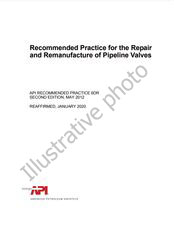

API PUBL 4772
Measuring Particulate Emissions from Combustion Sources
Translate name
STANDARD published on 1.9.2008
The information about the standard:
Designation standards: API PUBL 4772
Publication date standards: 1.9.2008
SKU: NS-1250177
The number of pages: 27
Approximate weight : 81 g (0.18 lbs)
Country: American technical standard
Category: Technical standards API
Annotation of standard text API PUBL 4772 :
Since the inception of the Clean Air Act, the petroleum refining industry has been faced with the need to determine criteria pollutant emissions from combustion sources. While some of these species, such as NOx, SO2 and CO remain in the vapor phase during and after combustion and are relatively simple to measure, particulate matter (PM) measurements are much more challenging. This is because while some PM such as fly ash or catalytic cracking catalyst fines is clearly solid material that is readily collected and measured on a sampling filter, other species that may exist in the vapor phase during combustion can later condense into aerosols downstream from the combustion zone. This can occur before or after any control devices, depending upon the temperature and composition of the combustion gases.
Consequently, it has been customary to refer to PM as being composed of two PM components, filterable and condensable, the relative amounts of each depending on the stack gas composition and temperature, control devices in use at the unit, and the method for measuring PM. While measuring filterable PM is relatively straightforward (i.e., PM collected on a filter), condensable PM is a more esoteric quantity and its contribution to total PM emissions is very much dependent upon the choice of the measurement method. The EPA apparently recognized this issue, and until the interest in measuring and controlling PM 2.5 emissions emerged in the 1990s, their PM sampling methods were centered on measuring only filterable PM. At the time that these methods were originally instituted, the best available pollution control devices were mainly limited to filterable PM and could not control the condensable portion of PM emissions. As interest in the health effects associated with PM emissions increased, efforts were centered on determining the contribution of the PM 2.5 fraction which was believed to most responsible for these effects and principally composed of condensable matter. This report will review the conditions leading to the formation of condensable particulate matter from stack gas components along with the methods used to measure PM emissions from refinery combustion sources.
We recommend:

Technical standards updating
Do you want to make sure you use only the valid technical standards?
We can offer you a solution which will provide you a monthly overview concerning the updating of standards which you use.
Would you like to know more? Look at this page.